For Ultra’s capability studies, we inspect a series of parts for specific dimensions and then do a statistical analysis on the readings to determine if the manufacturing process is stable enough to hold the dimensions within spec consistently. The standard practice is to perform capability studies on 30 pieces, but there are variations if this is not possible for some reason.
The analysis from a capability study provides us with a CPK (Process Capability Index) value. Generally, the value needs to be 1.33 or greater to show that Ultra is “capable”, although some customers require it to be 1.67 or higher.
A capability study is typically completed before full production begins so that Ultra can prove the manufacturing process is capable to the customer. However, a design change or significant modifications to production may require us to re-prove out the capability of the process. The time spent performing a capability study is critical to your metal part as it is ensuring that quality, precision and consistency will be established throughout production.
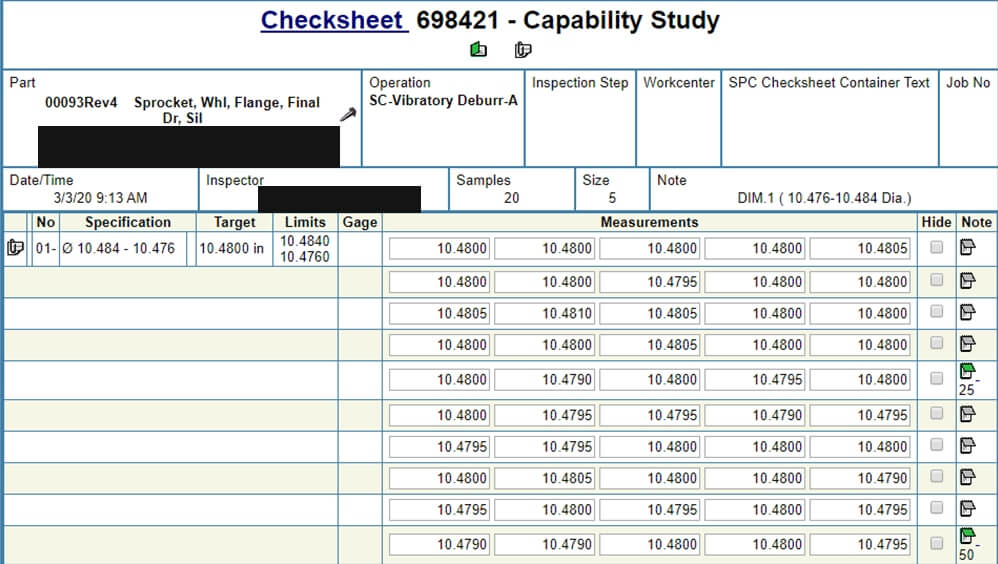
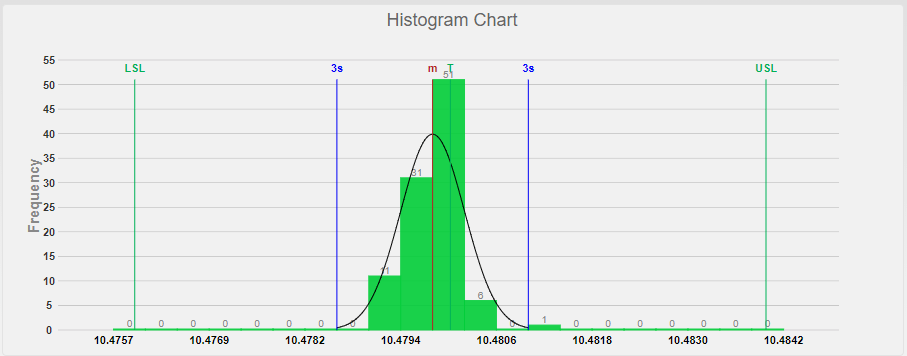
This example briefly outlines a capability study that was completed for a customer’s metal part. We inspected 100 pieces for the inside diameter. Shown here is a sampling of this data that was analyzed by our Quality Team.

A histogram is also created from these readings to show us the “trend” of the data. In this case, a majority of the readings are falling right at or near the “target” or nominal of the dimension. And this is a positive finding that we want to see.
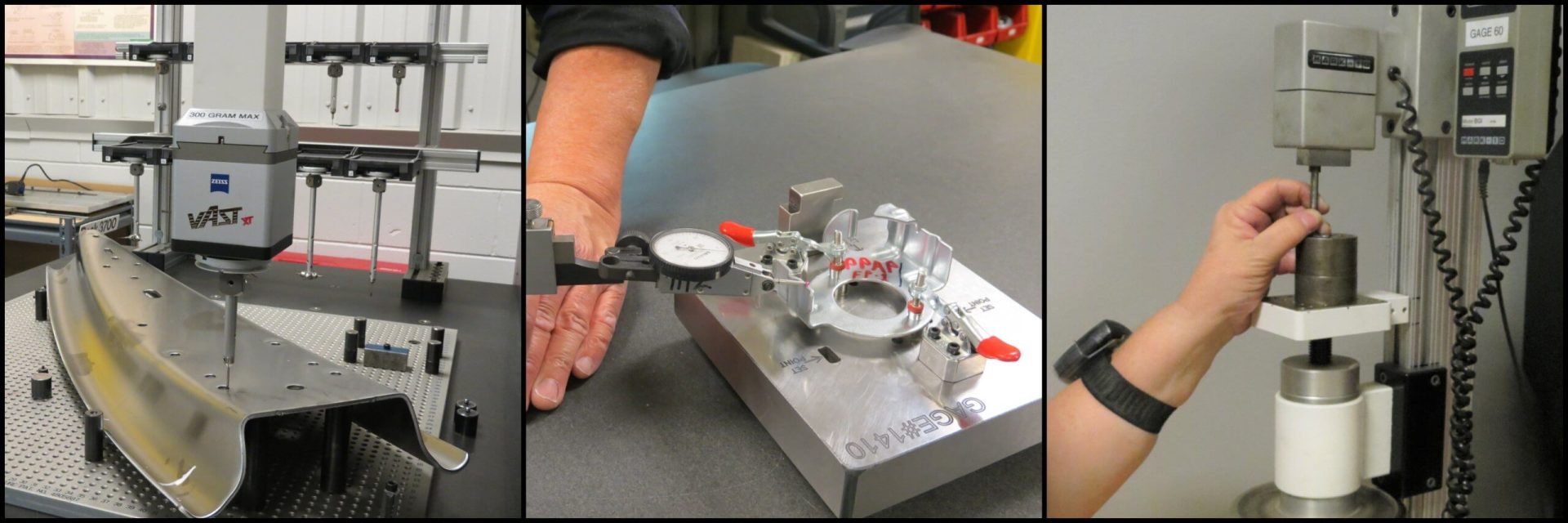
Capability studies are performed utilizing a variety of gauges to collect the required variable data. The quantity of pieces we need to measure, a set deadline and the actual metal part with its specific features, from hole diameters to its weight, help determine the type of gauge for the testing. Here are a few of the gauges we routinely use in our Quality Lab.
- Caliper
- Micrometer
- Gauge Pin
- Height Stand
- Indicator
- CMM
- Optical Comparator
Technology, like our ERP-based software – Plex, provides a detailed foundation for all of our capability studies. It maintains accurate data that can be easily shared with all team members involved in producing a specific metal part. This ERP-technology also gives instant access to information to keep projects moving and meet customer deadlines.